Unit 27
Tuas
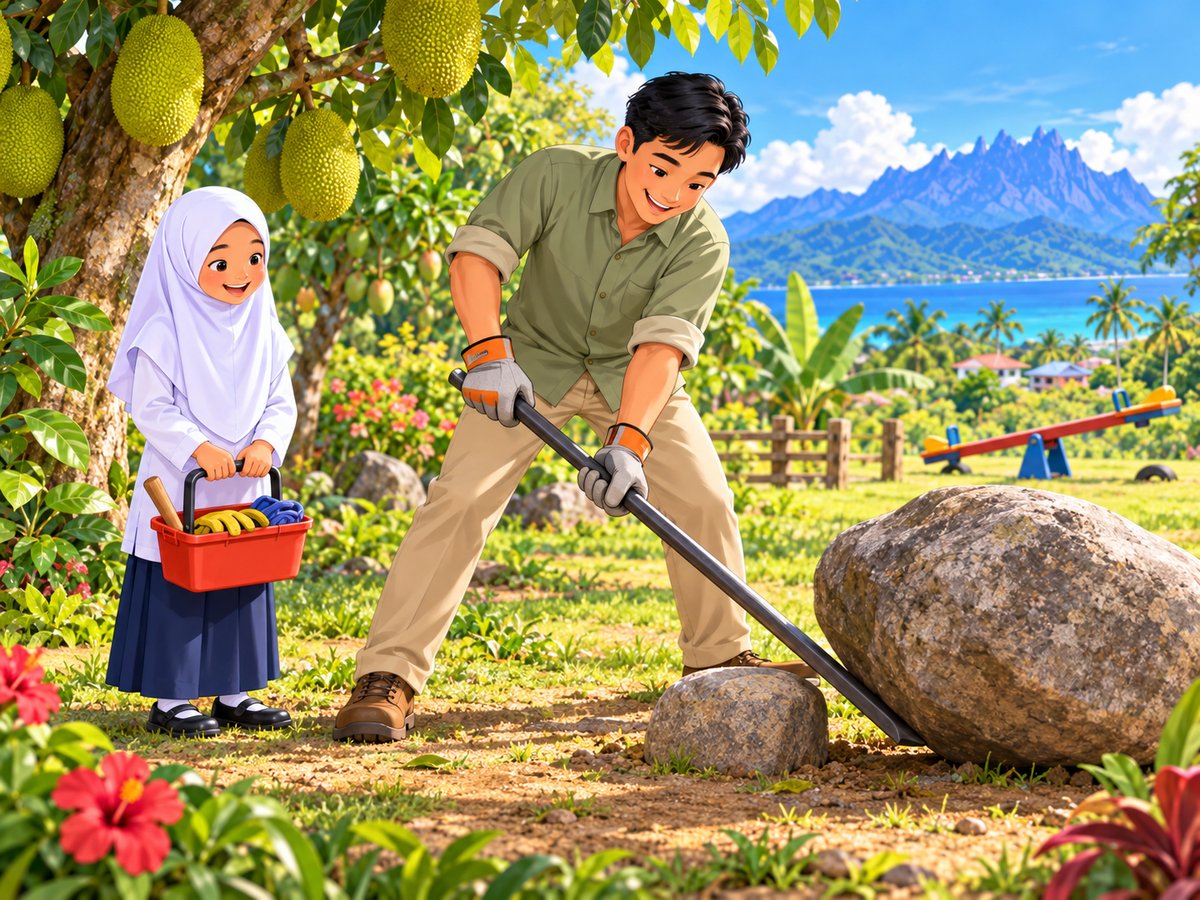
Ayah menggunakan batang besi untuk mengumpil batu besar di kebun.
Dengan sedikit tolakan, batu itu terangkat.
Alat mudah ini dipanggil tuas.
杠杆 = tuas
杠杆是一种简单机械,可以让我们用比较小的力去举起重的东西。这个单元学习杠杆的三个部分、生活中的例子,以及负荷和支点的距离怎样影响用力。
例子:爸爸用铁棒撬起大石头。
注意:杠杆让做事更省力。
lever = tuas
A lever is a simple machine that lets us lift heavy things with less force. This unit covers the three parts of a lever, everyday examples and how the load's distance from the fulcrum affects the force needed.
Example: Father uses an iron bar to lever up a big rock.
Watch out: levers make work easier.
Kenali
Tiga bahagian tuas
Setiap tuas mempunyai beban, fulkrum dan daya.
- beban – objek yang diangkat
- fulkrum – titik tumpu
- daya – tempat tenaga dikenakan
Contoh: Pada jongkang-jongket, bahagian tengah yang menjadi tempat berpusing ialah fulkrum.
杠杆的三部分 = tiga bahagian
负荷(beban)是要移动的东西;支点(fulkrum)是杠杆转动的点;力(daya)是我们施加力气的地方。
例子:跷跷板中间转动的地方就是支点。
注意:每一种杠杆都有这三个部分,只是位置不同。
three parts = tiga bahagian
The load (beban) is what is moved; the fulcrum (fulkrum) is the point the lever turns on; the effort or force (daya) is where we push or pull.
Example: the middle of a see-saw where it pivots is the fulcrum.
Watch out: every lever has all three parts, in different positions.
Semak kefahaman
Pada gunting, di manakah fulkrum?
剪刀的支点 = fulkrum gunting
剪刀两片刀片在哪里连起来、绕着它转动?那就是支点。剪的纸是负荷,手指按的地方是力。
例子:开瓶器的支点是卡在瓶盖边的地方。
注意:支点是转动的点。
fulcrum of scissors = fulkrum gunting
Where are the two blades joined and turning? That is the fulcrum. The paper being cut is the load; where the fingers press is the effort.
Example: a bottle opener's fulcrum rests on the edge of the cap.
Watch out: the fulcrum is the turning point.
Padankan
Pada penyapu habuk, padankan bahagian dengan tempatnya
扫帚的三部分 = penyapu
扫地时,握住扫帚顶端的手几乎不动,是支点;中间推的手出力,是力;扫帚尾端的灰尘是负荷。
例子:用钓竿时,握住尾端的手也是支点。
注意:先找不动的点,就是支点。
parts of a broom = penyapu
When sweeping, the hand holding the top barely moves: fulcrum. The hand pushing in the middle: effort. The dust at the end: load.
Example: with a fishing rod, the hand at the end is also the fulcrum.
Watch out: find the point that does not move: that is the fulcrum.
Fahami
Jarak beban dari fulkrum
Semakin dekat beban dengan fulkrum, semakin sedikit daya yang diperlukan untuk mengangkat beban.
Contoh: Batu yang diletakkan dekat dengan fulkrum lebih mudah diangkat menggunakan kayu pengumpil.
负荷与支点的距离 = jarak beban
负荷离支点越近,举起它需要的力越小;离得越远,需要的力越大。
例子:把石头放近支点,用木棒撬起来比较省力。
注意:这里说的是负荷到支点的距离。
load distance = jarak beban
The closer the load is to the fulcrum, the less force is needed to lift it; the farther, the more force.
Example: a rock placed near the fulcrum is easier to lever up.
Watch out: this is the distance from the load to the fulcrum.
Fikir
Bagaimanakah cara mengangkat beban dengan daya yang paling sedikit?
最省力 = paling sedikit daya
回想规律:负荷离支点越近,需要的力越小。
例子:用指甲剪时,指甲放在靠近支点的地方比较好剪。
注意:换更重的东西只会更费力。
least effort = paling sedikit daya
Recall the rule: the closer the load to the fulcrum, the less force needed.
Example: nails are easier to clip when placed near the clipper's pivot.
Watch out: a heavier load only needs more effort.
Ringkasan
Syabas!
Tuas
Tuas mempunyai beban, fulkrum dan daya. Semakin dekat beban dengan fulkrum, semakin sedikit daya diperlukan untuk mengangkatnya.
Kembali ke Mesin →