Unit 13
Gerak Balas Tumbuh-tumbuhan
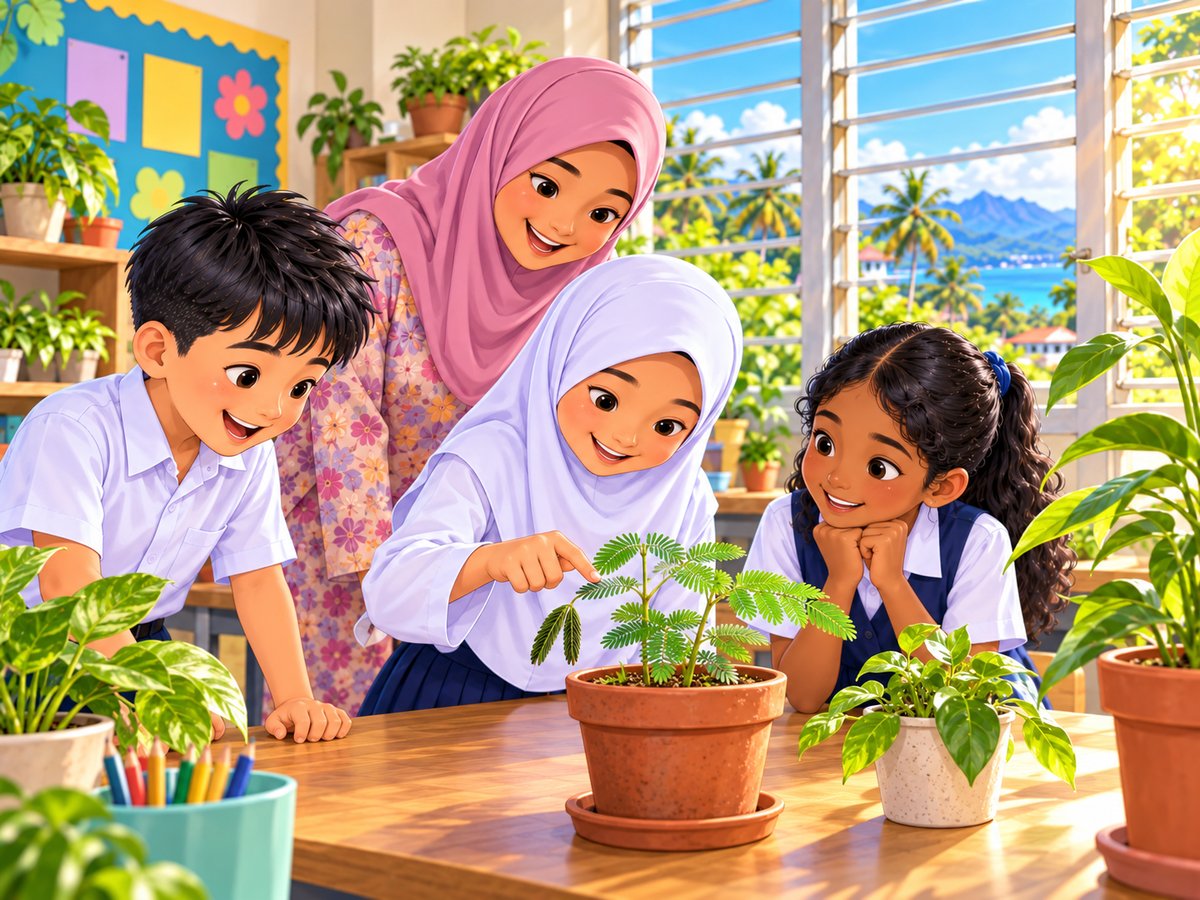
Pokok bunga di tepi tingkap kelas kelihatan condong ke arah luar.
Apabila disentuh, daun pokok semalu di padang pula menguncup.
Tumbuhan juga bergerak balas terhadap rangsangan!
植物的反应 = gerak balas tumbuhan
植物不会走路,但也会对刺激做出反应,只是通常比较慢。这个单元学习植物对水、地心引力、光和触碰四种刺激的反应。
例子:窗边的盆栽会朝窗外弯,含羞草被碰到叶子会合起来。
注意:植物的反应多数要几天才看得出来。
plant responses = gerak balas tumbuhan
Plants cannot walk, but they still respond to stimuli, usually slowly. This unit covers how plants respond to water, gravity, light and touch.
Example: a potted plant by the window bends outwards; a touch-me-not folds its leaves when touched.
Watch out: most plant responses take days to see.
Kenali
Empat rangsangan bagi tumbuhan
Bahagian tumbuhan bergerak balas terhadap rangsangan yang berbeza:
- akar → air dan tarikan graviti
- pucuk → cahaya
- daun (semalu) → sentuhan
Contoh: Akar anak pokok kacang hijau tetap tumbuh ke bawah walaupun biji benih diletakkan secara terbalik.
四种刺激 = empat rangsangan
根(akar)朝着水和地心引力(tarikan graviti)的方向生长;芽(pucuk)朝着光生长;有些植物的叶子(daun)对触碰有反应,例如含羞草(semalu)和捕蝇草(perangkap lalat Venus)。
例子:把绿豆倒过来放,它的根还是会往下长。
注意:根对水和地心引力都有反应,不只是水。
four stimuli = empat rangsangan
Roots (akar) grow towards water and towards gravity (tarikan graviti); shoots (pucuk) grow towards light; some leaves (daun) respond to touch, such as the touch-me-not (semalu) and the Venus flytrap (perangkap lalat Venus).
Example: even if a mung bean seed is placed upside down, its root still grows downwards.
Watch out: roots respond to both water and gravity, not only water.
Padankan
Padankan bahagian tumbuhan dengan rangsangan
配对 = padankan
芽往上朝光长;根往下朝地心引力长;含羞草的叶子被碰会合起来。
例子:向日葵的花朝着太阳。
注意:芽和根的方向刚好相反。
matching = padankan
Shoots grow up towards the light; roots grow down, pulled by gravity and drawn to water; touch-me-not leaves fold shut when touched. Match each plant part with the stimulus it responds to.
Example: a sunflower faces the sun.
Watch out: shoots and roots grow in opposite directions.
Fahami
Menyiasat gerak balas tumbuhan
Anak pokok cili diletakkan di dalam kotak kasut yang ada satu lubang. Selepas beberapa hari, pucuknya tumbuh bengkok ke arah lubang.
Contoh: Ini menunjukkan pucuk bergerak balas terhadap cahaya yang masuk melalui lubang.
做实验 = menyiasat
把辣椒幼苗放进只开一个小孔的鞋盒里。几天后,芽会弯向小孔生长,因为光只从小孔进来。这说明芽对光有反应。
例子:课室里的盆栽要常常转方向,植物才不会长歪。
注意:实验时其他条件,例如浇水量,要保持一样。
investigating = menyiasat
A chilli seedling is placed in a shoebox with one small hole. After a few days its shoot bends towards the hole, because light enters only there. This shows the shoot responds to light.
Example: turn classroom pot plants often so they do not grow crooked.
Watch out: keep other conditions, such as watering, the same.
Semak kefahaman
Mengapakah pucuk anak pokok di dalam kotak tumbuh ke arah lubang?
为什么弯向小孔 = mengapa
鞋盒里很暗,只有小孔有东西照进来。芽是对哪一种刺激有反应?
例子:藤蔓植物也会朝亮的地方爬。
注意:地心引力让根往下,不会让芽往旁边弯。
why it bends = mengapa
The box is dark; only the hole lets something in. Which stimulus does the shoot respond to?
Example: climbing plants also grow towards brighter places.
Watch out: gravity pulls roots down; it does not bend shoots sideways.
Fikir
Mengapakah daun pokok semalu menguncup apabila disentuh?
含羞草为什么合起来 = mengapa menguncup
含羞草的叶子被碰到就合起来,过一会儿又张开。这样的反应对它有什么好处?
例子:捕蝇草叶子合起来,可以抓住小虫。
注意:叶子合起来不是因为死了。
why it folds = mengapa menguncup
Touch-me-not leaves fold when touched and open again later. How does this response help the plant?
Example: a Venus flytrap closes its leaves to trap small insects.
Watch out: the leaves fold not because they are dead.
Ringkasan
Syabas!
Gerak balas tumbuh-tumbuhan
Akar bergerak balas terhadap air dan tarikan graviti, pucuk terhadap cahaya, dan daun semalu terhadap sentuhan.
Kembali ke Tumbuh-tumbuhan →