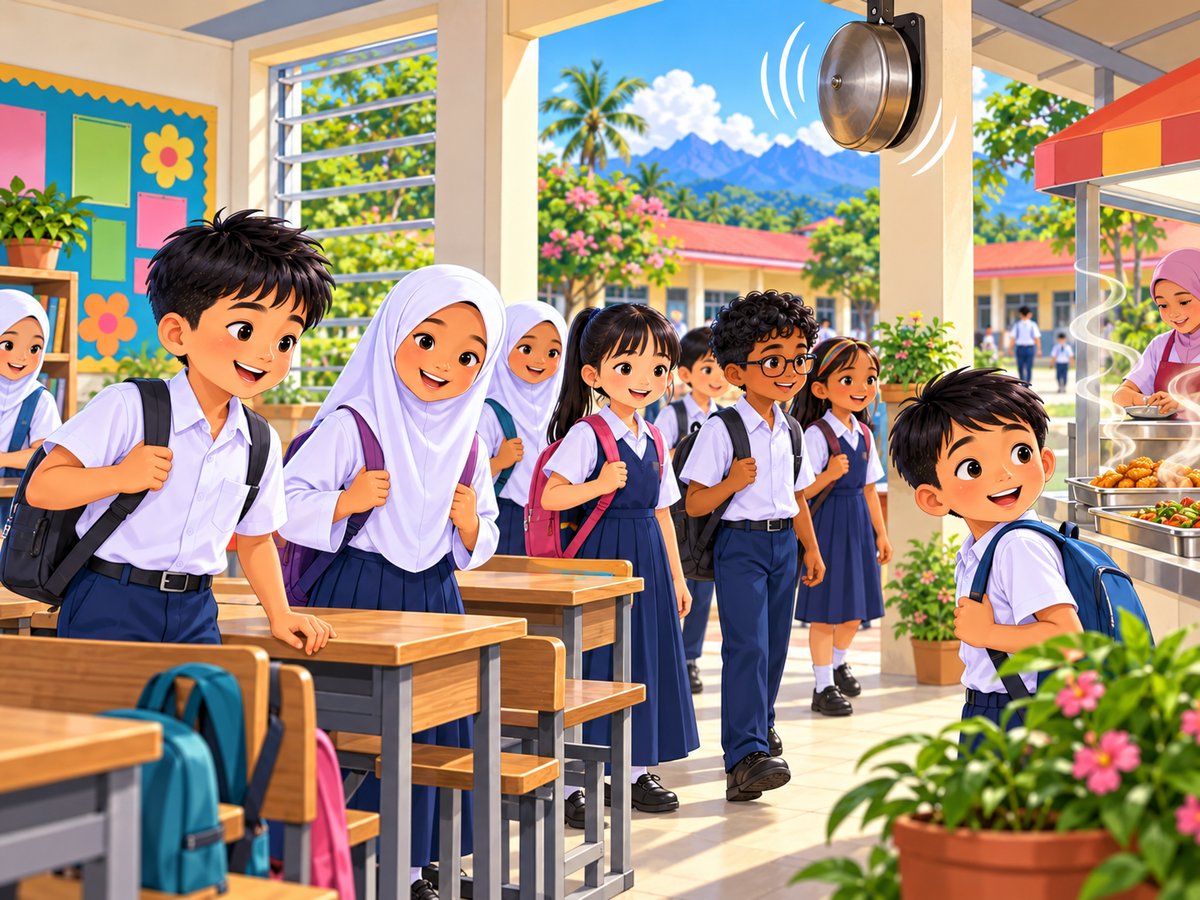
Kring! Loceng sekolah berbunyi dan murid-murid terus bangun untuk beratur. Bau nasi lemak dari kantin membuat perut Hafiz berbunyi. Badan kita sentiasa bertindak terhadap perubahan di sekeliling.
对刺激的反应 = gerak balas terhadap rangsangan
身边的变化,例如声音、光、气味,会让身体做出动作。这个单元学习什么是刺激和反应、五种感觉器官、反应为什么重要,以及哪些坏习惯会让反应变慢。
例子:听到钟声,学生站起来排队。
注意:刺激在先,反应在后。
response to stimuli = gerak balas terhadap rangsangan
Changes around us, such as sounds, light and smells, make the body act. This unit covers stimuli and responses, the five sense organs, why responses matter and which bad habits slow them down.
Example: hearing the bell, pupils stand up to line up.
Watch out: the stimulus comes first, the response after.
Kenali
Rangsangan dan gerak balas
Rangsangan ialah perubahan di sekeliling. Gerak balas ialah tindakan terhadap rangsangan. Rangsangan termasuk cahaya, bunyi, bau, rasa dan sentuhan.
Contoh: Cahaya terang (rangsangan) menyebabkan kita mengecilkan mata (gerak balas).
刺激与反应 = rangsangan dan gerak balas
刺激(rangsangan)是环境里的变化;反应(gerak balas)是身体对刺激做出的行动。刺激包括光、声音、气味、味道和触觉。
例子:强光照来(刺激),我们眯起眼睛(反应)。
注意:分清楚哪个是刺激、哪个是反应。
stimulus and response = rangsangan dan gerak balas
A stimulus (rangsangan) is a change around us; a response (gerak balas) is the action the body takes. Stimuli include light, sound, smell, taste and touch.
Example: bright light (stimulus) makes us squint (response).
Watch out: tell which part is the stimulus and which is the response.
Semak kefahaman
Siti menarik tangannya apabila tersentuh periuk panas. Apakah rangsangan dalam situasi ini?
找出刺激 = cari rangsangan
题目里有两件事:碰到很烫的锅,和把手缩回来。哪一个是外界的变化,哪一个是身体的行动?
例子:闻到烧焦味(刺激),跑去关火(反应)。
注意:缩手是反应,不是刺激。
finding the stimulus = cari rangsangan
There are two events: touching a hot pot and pulling the hand back. Which is the change outside, and which is the body's action?
Example: smelling burning (stimulus) and running to switch off the stove (response).
Watch out: pulling back the hand is the response.
Kenali
Organ deria
Lima organ deria mengesan rangsangan yang berbeza:
mata – cahaya · telinga – bunyi
hidung – bau · lidah – rasa
kulit – sentuhan, panas dan sejuk
Contoh: Lidah dapat mengesan rasa masam buah asam.
感觉器官 = organ deria
五种感觉器官:眼睛(mata)看光,耳朵(telinga)听声音,鼻子(hidung)闻气味,舌头(lidah)尝味道,皮肤(kulit)感觉触碰、冷热和痛。
例子:舌头尝到酸果的酸味。
注意:每个器官负责不同的刺激。
sense organs = organ deria
Five sense organs: eyes (mata) detect light, ears (telinga) sound, nose (hidung) smell, tongue (lidah) taste and skin (kulit) touch, heat, cold and pain.
Example: the tongue detects the sour taste of tamarind.
Watch out: each organ detects a different stimulus.
Padankan
Padankan organ deria dengan rangsangan
配对感官 = padankan organ deria
汽车喇叭声用耳朵听;花香用鼻子闻;冷水用皮肤感觉。逐一配对。
例子:看到红灯用的是眼睛。
注意:皮肤能感觉冷热。
matching sense organs = padankan organ deria
A car horn is heard with the ears, a flower's smell with the nose and cold water felt with the skin. Match them one by one.
Example: seeing a red light uses the eyes.
Watch out: the skin senses heat and cold.
Fahami
Kepentingan gerak balas
Gerak balas membantu kita mengelakkan kecederaan, melindungi diri, serta mendapat maklumat dan berkomunikasi.
Contoh: Apabila mendengar penggera kebakaran, murid segera keluar dari kelas mengikut laluan kecemasan.
反应的重要性 = kepentingan gerak balas
对刺激做出反应,可以帮助我们避免受伤、保护自己,也能获取资讯和跟别人沟通。
例子:听到火警铃声,学生马上按紧急路线离开课室。
注意:反应越快越能保护自己。
why responses matter = kepentingan gerak balas
Responding to stimuli helps us avoid injury, protect ourselves, get information and communicate with others.
Example: hearing a fire alarm, pupils leave the classroom by the emergency route at once.
Watch out: the faster we respond, the better we protect ourselves.
Amalan sihat
Tabiat yang mengganggu gerak balas
Meminum arak, menghidu gam dan menyalahgunakan dadah merosakkan otak dan organ deria. Gerak balas menjadi lambat dan mudah berlaku kemalangan.
Contoh: Pemandu yang mabuk lambat menekan brek apabila melihat lampu merah.
有害习惯 = tabiat buruk
喝酒(meminum arak)、吸胶(menghidu gam)和滥用毒品(menyalahgunakan dadah)会损害大脑和感觉器官,让人反应迟钝,容易发生意外,还会上瘾(ketagih)。
例子:喝醉的司机看到红灯,踩刹车的动作很慢。
注意:要对这些坏习惯说“不”。
harmful habits = tabiat buruk
Drinking alcohol (meminum arak), sniffing glue (menghidu gam) and drug abuse (menyalahgunakan dadah) damage the brain and sense organs, slow down responses, cause accidents and lead to addiction (ketagih).
Example: a drunk driver is slow to brake at a red light.
Watch out: say no to these habits.
Fikir
Mengapakah pemandu yang mabuk mudah terlibat dalam kemalangan?
why accidents happen = mengapa kemalangan
Alcohol affects the brain and senses. What happens to how quickly the body reacts to danger?
Example: a person who sniffs glue walks unsteadily and reacts slowly.
Watch out: the car and the road have not changed.
Ringkasan
Syabas!
Gerak balas terhadap rangsangan
Rangsangan ialah perubahan; gerak balas ialah tindakan. Mata, telinga, hidung, lidah dan kulit mengesan rangsangan. Arak, gam dan dadah melambatkan gerak balas.