Pintu lif pangsapuri hampir tertutup. Adam sedang tergesa-gesa ke sekolah. Dia nampak seorang ibu menolak kereta sorong bayi menuju ke lif. Adam menekan butang dan berkata, “Silakan masuk dahulu, mak cik.”
tolerance = toleransi
Tolerance means accepting people and ways that differ from ours, staying patient and in control when things are inconvenient, and being willing to give way. This unit covers tolerance among neighbours: accepting different cultures, handling small frictions patiently and settling disputes by discussion.
Example: although Adam is rushing to school, he holds the lift and invites a mother with a pram to enter first.
Watch out: tolerance is not cowardice; it is for the sake of harmony.
Kenali
Terima budaya jiran
Jiran kita menyambut perayaan dengan cara yang berbeza. Kita bertolak ansur dan memahami amalan mereka.
Contoh: Semasa Tahun Baharu Cina, ada persembahan tarian singa yang agak bising di taman. Adam sekeluarga keluar menonton dan bergembira bersama.
接纳邻居的文化 = terima budaya jiran
不同种族的邻居有不同的庆祝方式,例如舞狮、放烟火、宴客。偶尔会比较吵或比较多车,我们要互相体谅(bertolak ansur),理解这是他们的重要日子。
例子:农历新年社区有舞狮,比较吵,亚当一家出来一起看,开开心心。
注意:轮到我们庆祝时,也要顾及邻居,不要吵太晚。
accepting neighbours' culture = terima budaya jiran
Neighbours of different races celebrate in different ways, such as lion dances, fireworks or open houses. Sometimes it is noisier or busier with cars; we show give-and-take (bertolak ansur) and understand it is an important day for them.
Example: during Chinese New Year there is a rather noisy lion dance in the estate, and Adam's family comes out to watch and enjoy it.
Watch out: when it is our turn to celebrate, we must also think of the neighbours and not be noisy too late.
Semak kefahaman
Jalan di depan rumah Adam ditutup sementara untuk majlis perkahwinan jiran. Apakah sikap bertoleransi?
耐心体谅 = bersabar dan memahami
邻居办喜事,只是暂时的不方便。想一想:包容的人会怎样面对?会生气吵闹,还是耐心地换一条路走?
例子:邻居装修比较吵,我们知道只是几天,就耐心一点。
注意:当众骂人或一直按喇叭,会破坏邻里关系。
patient understanding = bersabar dan memahami
A neighbour's wedding is only a temporary inconvenience. Think: how would a tolerant person react — angrily and noisily, or patiently by taking another road?
Example: a neighbour's renovation is noisy, but we know it lasts only a few days, so we are patient.
Watch out: scolding someone in public or honking repeatedly damages neighbourly relations.
Fahami
Mengalah bukan lemah
Mengalah untuk kebaikan bersama ialah tanda kita matang. Kita memberi laluan, beratur mengikut giliran dan memaafkan perkara yang tidak sengaja.
Contoh: Seorang budak terlanggar Adam di kedai sehingga air minumannya tumpah. Budak itu meminta maaf. Adam tersenyum dan berkata, “Tidak mengapa.”
退让不是软弱 = mengalah bukan lemah
为了大家好而退一步(mengalah),表示我们成熟懂事:让人先走、守秩序排队(giliran)、原谅别人无心的(tidak sengaja)小错误。这不是输,也不是软弱。
例子:一个孩子不小心撞到亚当,把他的饮料弄翻了,孩子道歉,亚当笑着说“没关系”。
注意:如果有人故意欺负,就要告诉大人,不是一味忍耐。
giving way is not weakness = mengalah bukan lemah
Stepping back (mengalah) for the common good shows maturity: letting others go first, queuing in turn (giliran) and forgiving accidental (tidak sengaja) mistakes. It is neither losing nor weakness.
Example: a boy bumps into Adam at a shop and spills his drink; the boy apologises, and Adam smiles and says, 'It's alright.'
Watch out: if someone bullies you on purpose, tell an adult instead of just putting up with it.
Semak kefahaman
Pernyataan manakah yang betul tentang sikap mengalah?
understanding giving way = faham sikap mengalah
What is the purpose of giving way: harmony, or being useless? And what should we do when bullied? Think through each statement before choosing.
Example: two children both want the swing; one says, 'You go first,' and the conflict disappears.
Watch out: putting up with bullying is not tolerance; ask an adult for help.
Fahami
Tiga cara bertoleransi
Kita boleh bertoleransi dengan jiran melalui tiga cara:
bersabar
mengawal diri
bertolak ansur
Contoh: Anjing jiran menyalak ketika Adam mengulang kaji. Dia bersabar, mengawal diri dan berbincang dengan jirannya secara baik.
包容的三种方式 = tiga cara bertoleransi
第一,忍耐(bersabar):遇到不方便时不急躁;第二,自制(mengawal diri):控制脾气,不说伤人的话、不动手;第三,互相退让(bertolak ansur):双方都让一点,找出大家都能接受的办法。
例子:邻居的狗在亚当温习时一直叫,他先忍耐、不发脾气,再好好跟邻居商量。
注意:三种方式常常要一起用。
three ways of tolerance = tiga cara bertoleransi
First, be patient (bersabar): do not get impatient when inconvenienced. Second, control yourself (mengawal diri): keep your temper and avoid hurtful words or violence. Third, give and take (bertolak ansur): both sides yield a little to find an acceptable solution.
Example: the neighbour's dog barks while Adam revises; he stays patient, keeps his temper and then talks it over nicely with the neighbour.
Watch out: the three ways are often used together.
Padankan
Padankan situasi dengan cara bertoleransi
配对包容的方式 = padankan cara bertoleransi
先想清楚三个词:忍耐是安静地等、不抱怨;自制是控制怒气、不回骂;互相退让是双方都让一步、达成协议。再看每个情况最符合哪一种。
例子:两家人轮流使用门前空地,是互相退让。
注意:每个情况只配一种方式。
matching ways of tolerance = padankan cara bertoleransi
First be clear on the three: patience is waiting calmly without complaining; self-control is holding back anger and not answering rudeness; give-and-take is both sides yielding to reach an agreement. Then see which fits each situation best.
Example: two families taking turns to use the space in front of their houses is give-and-take.
Watch out: each situation matches only one way.
Fikir
Jika tiada toleransi
Tanpa toleransi, masalah kecil boleh menjadi perselisihan faham dan sengketa. Jiran bermasam muka dan kejiranan tidak sejahtera.
Contoh: Dua jiran bertengkar kerana tempat letak kereta. Mereka tidak bertegur sapa selama berbulan-bulan.
缺乏包容的后果 = kesan tiada toleransi
如果大家都不肯忍耐、不肯退让,一件小事就可能变成误会(perselisihan faham)和纠纷(sengketa),邻居互不理睬,社区不再安乐。
例子:两位邻居为了停车位吵架,好几个月都不说话。
注意:争吵通常没有赢家,两边都不开心。
without tolerance = kesan tiada toleransi
If no one is willing to be patient or give way, a small matter can become a misunderstanding (perselisihan faham) and a dispute (sengketa); neighbours stop speaking and the community loses its peace.
Example: two neighbours quarrel over a parking spot and do not speak to each other for months.
Watch out: in a quarrel there is usually no winner; both sides end up unhappy.
Semak kefahaman
Apakah kesan jika jiran tidak mahu bertoleransi?
推想后果 = jangka akibat
如果每个人都坚持自己的,不肯让一步,会发生什么?想一想不好的结果。
例子:两个孩子都不让,最后两人都玩不成秋千。
注意:这题要选的是坏结果。
predicting the result = jangka akibat
If everyone insists on their own way and no one yields, what happens? Think of a bad result.
Example: neither child gives way, and in the end neither gets to use the swing.
Watch out: choose the bad result here.
Amalkan
Selesaikan sengketa dengan berbincang
Apabila timbul masalah, jiran duduk berbincang dengan tenang dan mencari jalan yang adil untuk kedua-dua pihak.
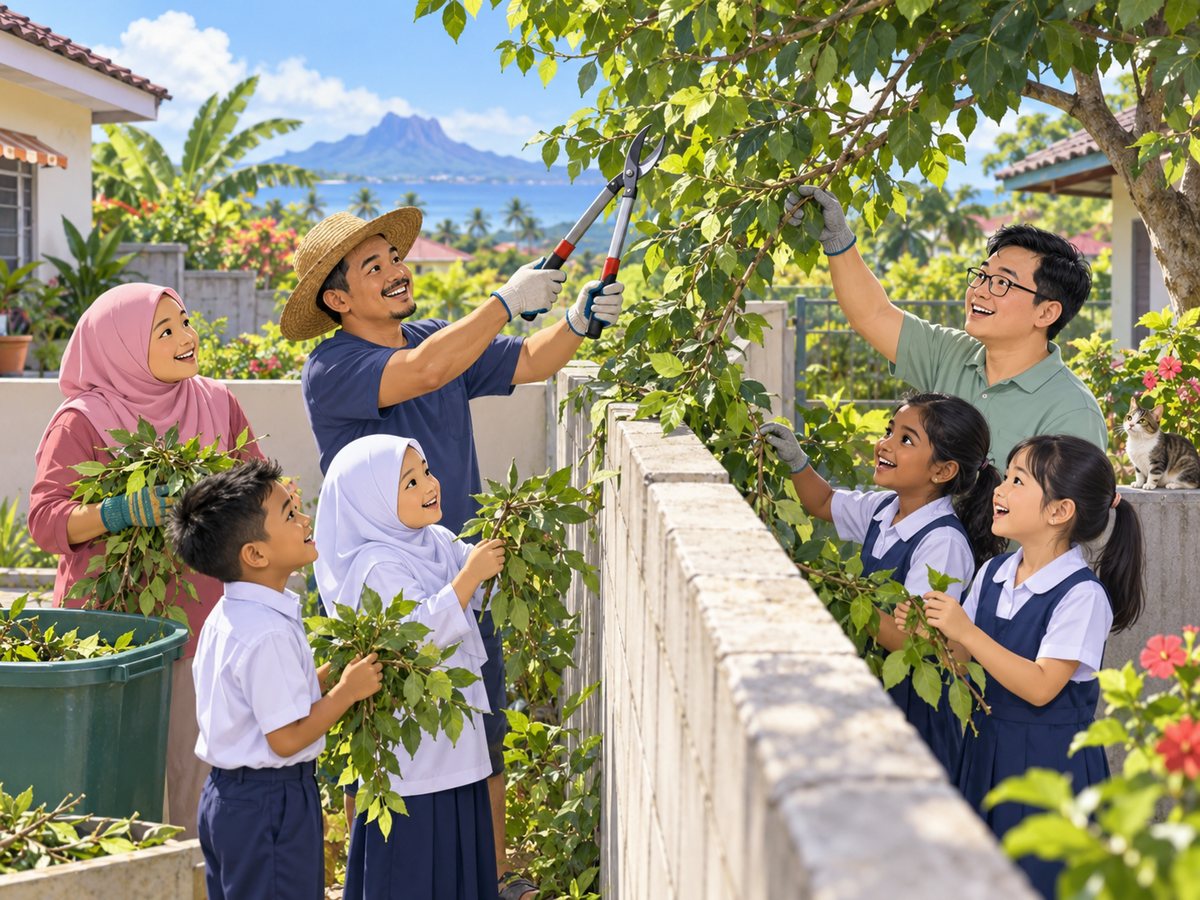
Contoh: Pokok jiran tumbuh melepasi tembok rumah Adam. Ayah Adam dan jirannya berbincang, lalu bersetuju memangkas dahan itu bersama-sama.
用协商解决纠纷 = selesaikan sengketa dengan berbincang
邻居之间有问题时,最好坐下来冷静地商量(berbincang),说出自己的困扰,也听对方的想法,再一起找一个对双方都公平的办法。吵架只会让事情卡住。
例子:邻居的树长过亚当家的围墙,亚当的爸爸和邻居商量后,一起修剪树枝。
注意:商量时说“我们可以怎样做”,比说“都是你的错”有用。
settling disputes by discussion = selesaikan sengketa dengan berbincang
When a problem arises, neighbours should sit down and talk calmly (berbincang), share their concerns, listen to each other and find a way that is fair to both sides. Quarrelling only gets things stuck.
Example: the neighbour's tree grows over Adam's wall; after talking it over, Adam's father and the neighbour agree to trim the branches together.
Watch out: saying 'What can we do?' works better than 'It's all your fault.'
Semak kefahaman
Asap dari pembakaran sampah jiran masuk ke rumah Adam. Apakah tindakan yang bertoleransi dan bijak?
温和而坚定 = lembut tetapi tegas
邻居的行为真的影响到我们时,包容不是不说,而是用平静、有礼的方式当面沟通,让问题解决。报复或到处说坏话,只会让事情更糟。
例子:楼上邻居常常很晚还在拖椅子,可以礼貌地请他们留意时间。
注意:报复(membalas)是包容的相反。
gentle but firm = lembut tetapi tegas
When a neighbour's behaviour really affects us, tolerance does not mean staying silent; it means talking face to face calmly and politely so the problem gets solved. Revenge or badmouthing only makes things worse.
Example: if the upstairs neighbours often drag chairs late at night, politely ask them to mind the time.
Watch out: revenge (membalas) is the opposite of tolerance.
Rasai
Kesabaran kunci kebahagiaan
Apabila kita bertoleransi, hati menjadi tenang dan hubungan dengan jiran kekal mesra. Kejiranan menjadi harmoni dan sejahtera.
Contoh: Selepas berbincang tentang pokok itu, keluarga Adam dan jirannya bergotong-royong memangkasnya sambil berbual mesra.
patience is the key to happiness = kesabaran kunci kebahagiaan
A tolerant person feels calmer and does not stay angry; neighbourly ties remain warm, and the community is harmonious (harmoni) and peaceful.
Example: after agreeing about the tree, Adam's family and the neighbour trim it together, chatting happily.
Watch out: when angry, take a deep breath before deciding what to do.
Pilih semua
Pilih semua perlakuan bertoleransi terhadap jiran.
找出包容的行为 = cari perlakuan bertoleransi
逐一判断:这个行为是耐心、自制、互相退让,还是急躁、报复、只顾自己?这题有几个答案。
例子:别人不小心踩到你的脚,你接受道歉。
注意:插队和报复都是不包容的表现。
finding tolerant actions = cari perlakuan bertoleransi
Judge each one: is it patient, self-controlled and give-and-take, or impatient, vengeful and selfish? There are several answers.
Example: someone accidentally steps on your foot and you accept their apology.
Watch out: cutting the queue and taking revenge are both intolerant.
Ringkasan
Syabas!
Bertoleransi sesama jiran
Terima budaya jiran, bersabar, kawal diri, bertolak ansur dan selesaikan masalah dengan berbincang. Kejiranan kita aman dan harmoni.