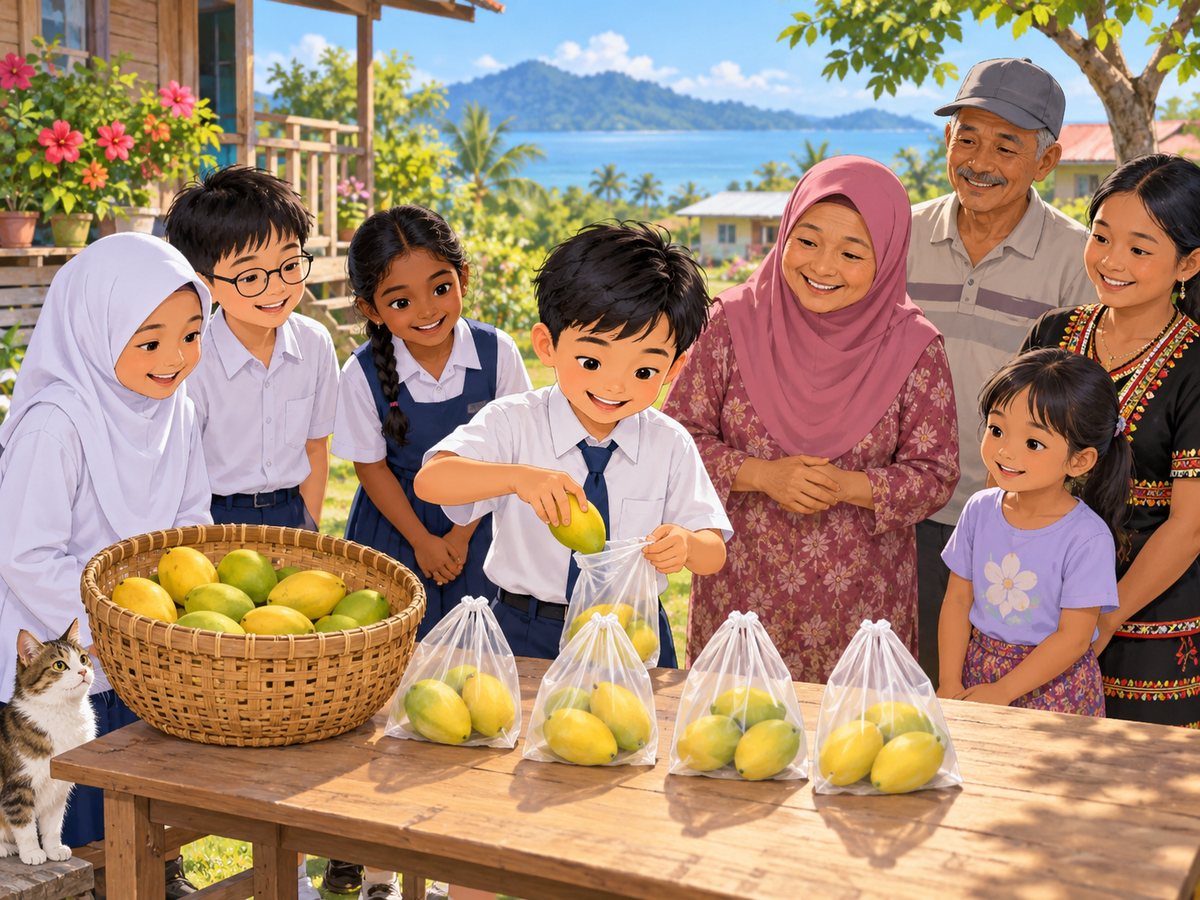
Pokok mangga di halaman rumah Encik Hamid berbuah lebat. Dia meminta Irfan membahagikan buah mangga kepada lima buah rumah jiran. Bagaimanakah Irfan boleh membahagikannya dengan adil?
fairness = keadilan
Being fair means treating everyone justly, without favouritism or regard to who we like, and sharing things, chances and tasks in a reasonable way. This unit covers fairness among neighbours: sharing, taking turns, dividing tasks and what unfairness leads to.
Example: Encik Hamid asks Irfan to share his mangoes among five neighbouring houses.
Watch out: fair sometimes means 'the same amount' and sometimes 'shared by need or ability'.
Kenali
Maksud bersikap adil
Bersikap adil bermaksud memberi layanan yang saksama kepada semua orang dan tidak berat sebelah.
Contoh: Irfan membahagikan 20 biji mangga sama banyak, iaitu 4 biji bagi setiap rumah, termasuk rumah jiran yang jarang ditemuinya.
what fairness means = maksud adil
Being fair (adil) means treating everyone equally (saksama) and not taking sides (berat sebelah); we do not give more to close friends or less to people we hardly know.
Example: Irfan shares 20 mangoes equally, 4 for each house, including a neighbour he seldom sees.
Watch out: secretly keeping extra for people you like is favouritism.
Semak kefahaman
Irfan ada 12 biji kuih untuk dikongsi dengan 4 orang kawan sejiran. Apakah cara yang adil?
平均分享 = kongsi sama banyak
每位朋友的条件一样时,公平的做法就是平均分。先算一算:12 个分给 4 个人,每人几个?再看哪一个选项没有偏心。
例子:8 支铅笔分给 2 个人,每人 4 支。
注意:按“谁比较熟”来分,就不公平了。
sharing equally = kongsi sama banyak
When all friends are in the same situation, the fair way is to share equally. First work out 12 shared among 4 people, then see which option shows no favouritism.
Example: 8 pencils shared between 2 people is 4 each.
Watch out: sharing by 'who is closer to me' is unfair.
Fahami
Ikut giliran
Adil juga bermaksud mengikut giliran. Setiap jiran diberi peluang yang sama untuk menggunakan kemudahan bersama.
Contoh: Kanak-kanak di taman Irfan bergilir-gilir bermain buaian, setiap orang lima minit.
轮流 = ikut giliran
共用的设施,例如秋千、羽毛球场、社区礼堂,要让大家轮流(giliran)使用,每个人都有一样的机会。插队或霸占,就是不公平。
例子:伊尔凡社区的孩子们轮流荡秋千,每人五分钟。
注意:年纪小或先到的人也要守规矩轮流,不能硬抢。
taking turns = ikut giliran
Shared facilities, such as swings, the badminton court or the community hall, should be used in turns (giliran) so everyone gets the same chance. Cutting the queue or hogging them is unfair.
Example: the children in Irfan's neighbourhood take turns on the swing, five minutes each.
Watch out: younger children and those who came first must also follow the turns, not grab.
Semak kefahaman
Ramai jiran mahu menggunakan gelanggang badminton pada petang Sabtu. Apakah cara yang adil?
公平地安排 = atur dengan adil
很多人想用同一个场地时,要想一个让每个人都有机会的方法。哪一个做法照顾到所有邻居?
例子:社区礼堂用登记表,先登记、按顺序使用。
注意:按财富或熟不熟来决定,都是偏心。
arranging fairly = atur dengan adil
When many people want the same court, think of a way that gives everyone a chance. Which option looks after all neighbours?
Example: the community hall uses a booking sheet, so people use it in the order they book.
Watch out: deciding by wealth or friendship is favouritism.
Amalkan
Maklumat untuk semua jiran
Maklumat penting seperti risalah kesihatan atau notis gotong-royong perlu sampai kepada semua jiran, tanpa memilih.
Contoh: Irfan membantu ayahnya mengedarkan risalah tentang vaksin ke setiap rumah di lorongnya, termasuk rumah di hujung jalan.
资讯人人有份 = maklumat untuk semua
重要的资讯,例如健康传单(risalah)、停水通知、大扫除通告,要送到每一户,不能只给认识的人。少了谁,那一家就可能错过重要的事。
例子:伊尔凡帮爸爸把疫苗传单派到巷子里每一户,连路尾那一家也没漏掉。
注意:漏掉住得远或不熟的邻居,也是不公平。
information for everyone = maklumat untuk semua
Important information, such as health leaflets (risalah), water-cut notices or clean-up notices, must reach every house, not only people we know. Anyone left out might miss something important.
Example: Irfan helps his father deliver vaccine leaflets to every house in the lane, including the one at the end of the road.
Watch out: skipping neighbours who live far away or whom we do not know is also unfair.
Semak kefahaman
Mengapakah risalah tentang denggi perlu diedarkan kepada semua rumah?
人人都有权知道 = hak mendapat maklumat
健康资讯关系到每一户人家的安全。想一想:如果有人没收到传单,会怎样?哪一个答案照顾到所有人?
例子:停电通知贴在每一栋楼的布告栏,大家都知道。
注意:传单不是越快派完越好,而是要每户都收到。
everyone's right to know = hak mendapat maklumat
Health information affects every household's safety. Think: what happens if someone does not receive the leaflet? Which answer looks after everyone?
Example: a power-cut notice is posted on every block's notice board so everyone knows.
Watch out: the goal is not to finish quickly but for every house to receive it.
Fikir
Adil mengikut kebolehan dan keperluan
Adil tidak semestinya sama banyak. Tugasan boleh dibahagikan mengikut kebolehan dan bantuan diberi mengikut keperluan.
Contoh: Semasa gotong-royong, orang dewasa mengangkat kayu, kanak-kanak mengutip daun, dan warga emas menyediakan minuman.
按能力和需要来分 = ikut kebolehan dan keperluan
公平不一定是每个人都一样多。分配工作时,要看每个人的能力(kebolehan);分配帮助时,要看谁最需要(keperluan)。这样才合理。
例子:大扫除时,大人搬木头,小孩捡叶子,老人家准备饮料。
注意:叫小孩搬重木头,看起来“一样”,其实不公平也不安全。
by ability and need = ikut kebolehan dan keperluan
Fair does not always mean equal amounts. When sharing out tasks, consider each person's ability (kebolehan); when giving help, consider who needs it most (keperluan). That is reasonable.
Example: at a clean-up, adults carry wood, children pick up leaves and elders prepare drinks.
Watch out: making children carry heavy wood may look 'equal' but is neither fair nor safe.
Semak kefahaman
Penduduk ingin membantu jiran yang rumahnya rosak akibat ribut. Bantuan paling banyak patut diberi kepada siapa?
按需要帮忙 = bantu ikut keperluan
帮助灾民时,公平是看谁的损失最大、最需要帮助,而不是看谁跟我们比较好。
例子:派发食物时,先给家里没有存粮的人家。
注意:“谁常请我们吃饭”与需要无关。
helping by need = bantu ikut keperluan
When helping storm victims, fairness means looking at who lost the most and needs help most, not who is closest to us.
Example: when giving out food, start with families who have none left at home.
Watch out: 'who often invites us to eat' has nothing to do with need.
Fikir
Akibat tidak adil
Jika kita tidak adil, jiran berasa tersisih dan kecewa. Timbul rasa marah dan hubungan berjiran menjadi tegang.
Contoh: Seorang ketua blok hanya memberi hadiah kepada kawan-kawannya. Jiran lain berasa tidak puas hati.
不公平的后果 = akibat tidak adil
如果做事偏心,被冷落的邻居会觉得被排挤(tersisih)、失望,甚至生气,邻里关系变得紧张,以后大家也不愿意合作。
例子:一位楼长只把礼物给自己的朋友,其他住户都很不满。
注意:公平能维持社区的和平(keamanan)。
results of unfairness = akibat tidak adil
When we act with favouritism, the neighbours left out feel excluded (tersisih), disappointed or even angry; relationships become tense and people are less willing to cooperate later.
Example: a block leader gives prizes only to his friends, and the other residents are unhappy.
Watch out: fairness keeps the community peaceful (keamanan).
Semak kefahaman
Apakah kesannya jika hadiah pertandingan mewarna di taman diberi kepada anak jiran yang rapat sahaja?
站在别人的立场 = fikir dari sudut orang lain
想象你认真参加了比赛,奖品却只给评审的好朋友,你会有什么感觉?题目问的是不公平带来的结果。
例子:分组时总是让同一批人当组长,其他人会觉得不公平。
注意:这题要选的是负面的结果。
seeing from others' side = fikir dari sudut orang lain
Imagine you entered a competition seriously, but the prizes went only to the judge's friends. How would you feel? The question asks for the result of unfairness.
Example: when the same few people are always made group leaders, others feel it is unfair.
Watch out: choose a negative result here.
Pilih semua
Majlis jamuan kejiranan dihadiri jiran berbilang kaum dan agama. Pilih semua tindakan yang adil.
公平地办聚餐 = jamuan yang adil
邻居来自不同宗教,饮食习惯不同,公平的做法是让每个人都有可以吃的食物、每户都被邀请,并按能力分工。只照顾自己人就不公平。这题有几个答案。
例子:准备清真食物和素食,让穆斯林和吃素的邻居都能吃。
注意:先让老人家坐,是照顾需要,也是公平的一种。
a fair gathering = jamuan yang adil
Neighbours of different religions eat differently, so a fair gathering gives everyone food they can eat, invites every household and shares tasks by ability. Looking after only our own group is unfair. There are several answers.
Example: prepare halal food and vegetarian dishes so Muslim and vegetarian neighbours can both eat.
Watch out: seating elders first meets their need and is also a kind of fairness.
Rasai
Bagaimanakah perasaan Irfan selepas berjaya membahagikan mangga dengan adil?
公平之后的心情 = perasaan selepas berlaku adil
做到公平,每个人都满意,自己心里也会觉得踏实、开心。想一想哪一个感受符合这个情况。
例子:分组公平,大家都开开心心地参加活动,你也觉得很高兴。
注意:公平的人不会因为自己少拿了而难过。
feelings after being fair = perasaan selepas berlaku adil
When we are fair and everyone is satisfied, we feel at ease and happy inside. Think which feeling fits this situation.
Example: when groups are formed fairly, everyone joins in happily, and you feel glad too.
Watch out: a fair person does not feel sad about taking a little less.
Ringkasan
Syabas!
Bersikap adil sesama jiran
Berkongsi sama rata, ikut giliran, sampaikan maklumat kepada semua dan bahagikan tugasan mengikut kebolehan serta keperluan.