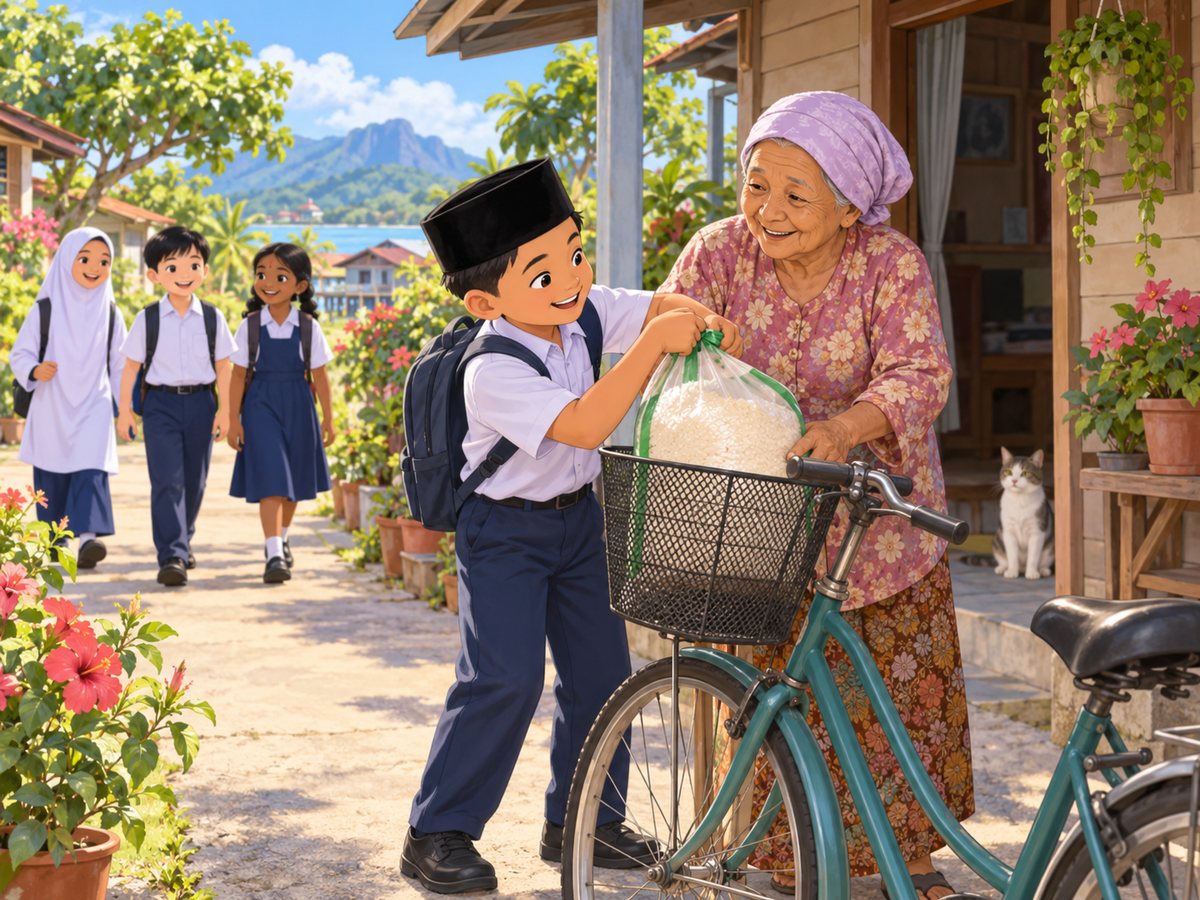
Nenek Esah tinggal seorang diri di sebelah rumah Hafiz. Pagi ini, Hafiz nampak Nenek Esah susah payah membawa beg beras yang berat. Apakah yang patut Hafiz lakukan?
baik hati = 善良
善良就是关心别人的需要,看到别人有困难时愿意伸出援手,而且是真心的,不求回报。这个单元学习怎样对邻居善良:留意邻居需要什么、在不同情况下帮忙,以及帮忙以后的感受。
例子:哈菲兹看到独居的埃莎奶奶提着很重的米,就跑过去帮她。
注意:帮忙也要量力而为,太重或危险的事要请大人一起做。
kind-hearted = baik hati
Being kind means caring about other people's needs and being willing to help when they face difficulty, sincerely and without expecting anything back. In this unit we learn to be kind to neighbours: noticing what they need, helping in different situations and how helping makes us feel.
Example: Hafiz sees Nenek Esah, who lives alone, carrying a heavy bag of rice and runs over to help.
Watch out: help within your ability; ask an adult to join in when a job is too heavy or dangerous.
Kenali
Prihatin terhadap jiran
Jiran yang prihatin peka terhadap keperluan orang di sekelilingnya. Dia membantu dengan ikhlas walaupun tidak diminta.
Contoh: Hafiz perasan Nenek Esah tidak keluar rumah selama dua hari. Dia memberitahu ibunya, lalu mereka pergi bertanya khabar.
caring = prihatin
A caring neighbour notices what the people around them need and is willing to help sincerely (ikhlas), even without being asked. Often a small observation leads to big help.
Example: Hafiz notices Nenek Esah has not left her house for two days, tells his mother, and they visit to check on her.
Watch out: caring is not spying on someone's private life; it is noticing whether they are safe and need help.
understanding the word = fahami maksud
This question asks what a caring neighbour is. Think: how does someone who sincerely cares respond to a neighbour's needs, and do they expect something back?
Example: seeing a neighbour's car break down, you offer to help push it.
Watch out: asking again and again about someone's private matters is not caring.
Fahami
Pelbagai cara membantu jiran
Kita boleh membantu jiran dengan pelbagai cara:
Tenaga – mengangkat barang, membersihkan halaman
Barang – memberi makanan atau keperluan
Sokongan – melawat dan memberi kata semangat
Contoh: Ketika Puan Kavitha demam, Hafiz dan ibunya menghantar bubur dan membantu menyiram pokok bunganya.
帮助的方式 = cara membantu
帮助邻居不一定要花钱。可以出力(tenaga),例如帮忙搬东西;可以给东西(barang),例如送食物;也可以给精神上的支持(sokongan),例如探望、安慰。按邻居真正需要的去帮最好。
例子:卡维塔阿姨发烧,哈菲兹和妈妈送粥,还帮她浇花。
注意:先问清楚邻居需要什么,不要自作主张。
ways to help = cara membantu
Helping neighbours does not always cost money. You can give your effort (tenaga), like carrying things; give items (barang), like food; or give emotional support (sokongan), like visiting and comforting. It is best to help with what the neighbour really needs.
Example: when Puan Kavitha has a fever, Hafiz and his mother bring porridge and water her plants.
Watch out: ask what the neighbour needs first instead of deciding on your own.
Semak kefahaman
Anak jiran Mei Ling sedih kerana kucingnya hilang. Bantuan manakah yang paling sesuai?
按需要帮忙 = bantu ikut keperluan
先看清楚邻居遇到的是什么问题,再选最能解决这个问题的帮忙方式。不同的问题需要不同的帮助。
例子:邻居的孩子功课不会做,可以陪他一起温习。
注意:给钱或叫对方买新的,不一定真正帮到他的忙。
helping by need = bantu ikut keperluan
First see clearly what problem the neighbour has, then choose the help that best solves it. Different problems need different kinds of help.
Example: if a neighbour's child cannot do their homework, you can revise together with them.
Watch out: giving money or telling them to buy a new one may not really help.
Amalkan
Bantu jiran warga emas dan OKU
Jiran warga emas dan Orang Kurang Upaya (OKU) mungkin memerlukan lebih bantuan. Kita membantu dengan sopan dan sabar.
Contoh: Encik Rahman menggunakan kerusi roda. Setiap pagi, Hafiz membantu mengambil surat khabar dari peti suratnya.
帮助年长和残障邻居 = bantu warga emas dan OKU
年长者(warga emas)和残障人士(OKU)做某些事比较吃力,我们可以耐心、有礼貌地帮忙。帮的时候要尊重他们,让他们自己决定需要哪些帮助。
例子:拉赫曼先生坐轮椅,哈菲兹每天早上帮他从信箱拿报纸。
注意:不要把他们当成什么都不会,也不要取笑他们的不方便。
helping older and disabled neighbours = bantu warga emas dan OKU
Older people (warga emas) and persons with disabilities (OKU) may find some tasks harder, so we help patiently and politely. Respect them and let them decide what help they need.
Example: Encik Rahman uses a wheelchair, so every morning Hafiz fetches the newspaper from his letterbox.
Watch out: do not treat them as unable to do anything, and never laugh at their difficulties.
Semak kefahaman
Atuk Lim berjalan perlahan dengan tongkat ke kedai. Apakah tindakan yang baik hati?
有礼貌地提出帮忙 = tawar bantuan dengan sopan
看到年长的邻居行动不方便,先客气地问他需不需要帮忙,再照他的意思去做。这样既帮了忙,也尊重了他。
例子:“阿公,我帮您提袋子好吗?”
注意:模仿或取笑年长者的动作,会让他们难过。
offering help politely = tawar bantuan dengan sopan
When an older neighbour moves with difficulty, first ask kindly whether they need help, then follow their wishes. This helps them and respects them too.
Example: 'Grandpa, may I carry your bag for you?'
Watch out: copying or mocking how an older person moves will hurt their feelings.
Amalkan
Jiran ditimpa musibah
Apabila jiran ditimpa kebakaran atau banjir, penduduk boleh bergotong-royong membantu mengikut kemampuan.
Contoh: Rumah keluarga Ah Seng terbakar. Penduduk taman mengumpul pakaian, makanan dan buku sekolah untuk mereka.
a neighbour hit by disaster = jiran ditimpa musibah
When a neighbour's house has a fire or flood, they lose many things and feel very sad. Residents can collect clothes, food and stationery, or help clean the house, so the family can get back on their feet.
Example: Ah Seng's house burns down, so the residents collect clothes, food and school books for the family.
Watch out: children must never enter a burnt or flooded area on their own; help with adults in a safe place.
Semak kefahaman
Kawasan rumah Ajon dilanda banjir. Apakah bantuan yang sesuai daripada murid Tahun 4 seperti Hafiz?
安全又有用的帮忙 = bantuan selamat dan berguna
帮助灾民时要想两件事:这个帮忙对他们有没有用?对自己安不安全?四年级学生能做的事,要在大人陪同下进行。
例子:把还很新的书包捐给受灾的同学。
注意:拿别人受灾的样子开玩笑,是很伤人的行为。
safe and useful help = bantuan selamat dan berguna
When helping disaster victims, think of two things: is the help useful to them, and is it safe for you? What a Year 4 pupil does should be done with an adult present.
Example: donating a school bag that is still in good condition to a classmate affected by the flood.
Watch out: joking about how disaster victims look is very hurtful.
Amalkan
Sambut jiran baharu
Jiran baharu belum mengenali kawasan itu. Kita boleh menyambut mereka dengan mesra dan menunjukkan kemudahan di sekitar taman.
Contoh: Keluarga Puan Devi baru berpindah. Hafiz memberitahu mereka lokasi kedai runcit, klinik dan surau.
welcoming new neighbours = sambut jiran baharu
Newly moved-in neighbours do not know the area yet and have no friends there. We can greet them warmly and tell them where the shops, clinic and bus stop are so they feel at home.
Example: Puan Devi's family has just moved in, so Hafiz shows them where the grocery shop, clinic and surau are.
Watch out: do not ask too many personal questions at once; let new neighbours settle in slowly.
Semak kefahaman
Sebuah keluarga baru berpindah ke lorong rumah Siti. Apakah yang boleh Siti lakukan?
主动友善 = mesra dan proaktif
新邻居还不认识大家,所以由我们先开口会让他们轻松很多。想一想哪一个做法能让新邻居觉得受欢迎。
例子:送一盘水果过去,说“欢迎搬来这里”。
注意:只在旁边看或等对方开口,新邻居可能会觉得孤单。
being friendly first = mesra dan proaktif
New neighbours do not know anyone yet, so it helps a lot when we speak first. Think which action makes them feel welcome.
Example: bringing a plate of fruit and saying, 'Welcome to the neighbourhood.'
Watch out: just watching or waiting for them to speak may make new neighbours feel lonely.
Rasai
Perasaan selepas membantu
Membantu jiran membuatkan kita berasa gembira dan puas hati. Jiran pula berasa dihargai dan hubungan menjadi lebih erat.
Contoh: Nenek Esah tersenyum dan berterima kasih. Hafiz berasa sangat gembira kerana dapat meringankan bebannya.
帮忙后的感受 = perasaan selepas membantu
帮了别人以后,我们心里会觉得开心、满足(puas hati);被帮的邻居觉得被关心,两家人的关系也更亲近。这种好感受会鼓励大家继续互相帮忙。
例子:埃莎奶奶笑着道谢,哈菲兹觉得非常快乐。
注意:帮忙的目的不是为了被称赞,就算没人看见也一样做。
feelings after helping = perasaan selepas membantu
After helping someone, we feel happy and satisfied (puas hati); the neighbour feels cared for, and the two families grow closer. These good feelings encourage everyone to keep helping each other.
Example: Nenek Esah smiles and says thank you, and Hafiz feels very happy.
Watch out: we help not to be praised; do it even when nobody sees.
Semak kefahaman
Bagaimanakah perasaan kamu selepas membantu jiran dengan ikhlas?
真诚帮忙的感受 = perasaan membantu dengan ikhlas
真心帮忙的人,帮完会因为别人轻松了而开心。如果帮完觉得生气,或只想炫耀,那就不是真诚的心。
例子:帮邻居找到走失的猫,看到他笑了,心里也跟着高兴。
注意:“骄傲”和“开心”不一样,炫耀会让好事变了味道。
feelings of sincere help = perasaan membantu dengan ikhlas
A person who helps sincerely feels happy afterwards because the other person's load is lighter. Feeling angry, or only wanting to show off, means the help was not sincere.
Example: you help a neighbour find their lost cat, see them smile, and feel glad too.
Watch out: being boastful is different from being happy; showing off spoils a good deed.
Pilih semua
Pilih semua perlakuan baik hati terhadap jiran.
找出善良的行为 = cari perlakuan baik hati
每个选项都问自己:这个行为是在帮邻居,还是在给邻居添麻烦、让他难过?只选帮忙的行为,这题答案不只一个。
例子:替生病的邻居送食物,是善良的行为。
注意:把垃圾丢到别人家、取笑拄拐杖的人,都会伤害邻居。
finding kind actions = cari perlakuan baik hati
For each option, ask yourself: does this help the neighbour, or does it trouble or hurt them? Choose only the helpful actions; there is more than one answer.
Example: bringing food to a sick neighbour is a kind action.
Watch out: throwing rubbish into someone's yard or mocking a person who uses a walking stick hurts the neighbour.
Ringkasan
Syabas!
Baik hati kepada jiran
Peka terhadap keperluan jiran, bantu dengan ikhlas mengikut kemampuan, utamakan keselamatan dan rasai kegembiraan menolong orang lain.