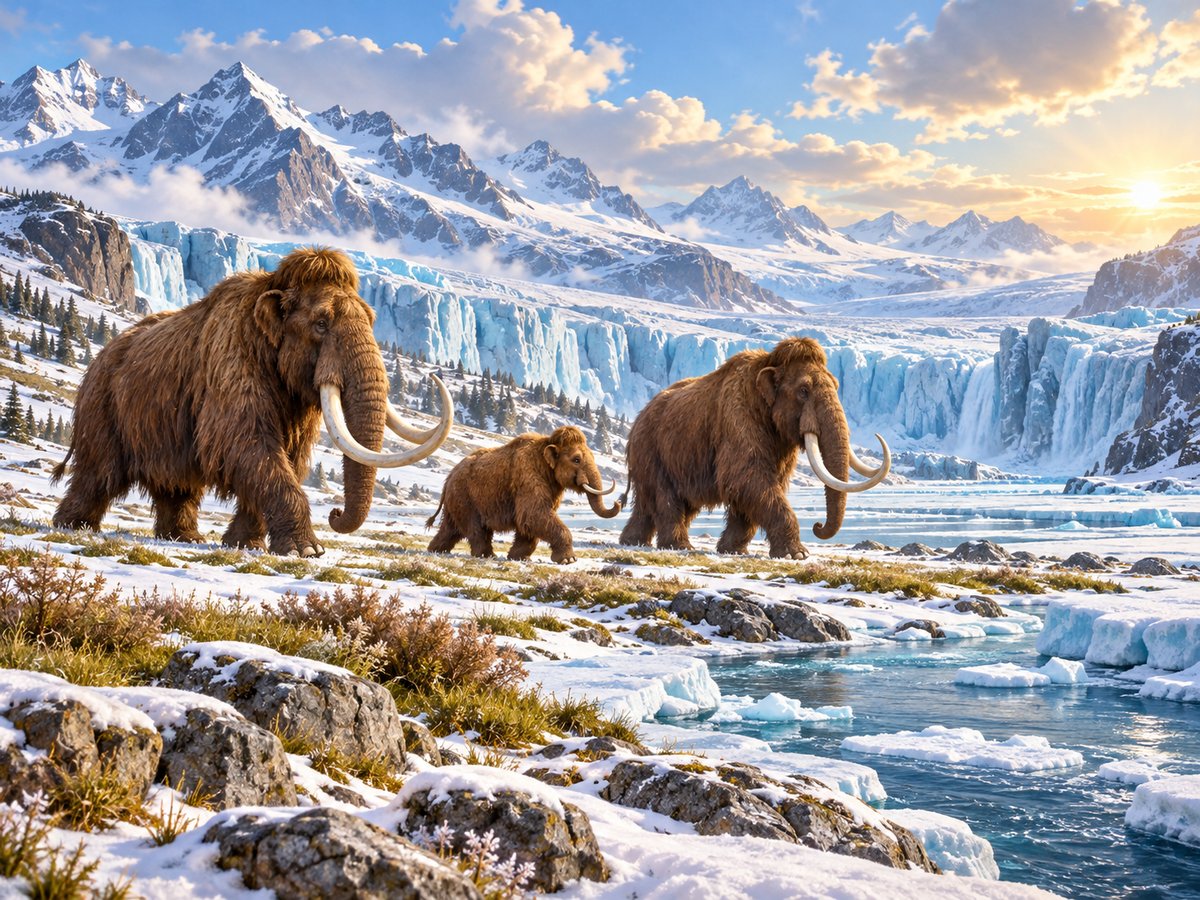
Bayangkan sebahagian besar bumi diliputi ais yang tebal. Haiwan berbulu tebal seperti mamot berjalan di atas padang yang sejuk. Inilah gambaran bumi pada Zaman Air Batu.
Zaman Air Batu = 冰河时期
很久很久以前,地球很冷,很多地方被厚厚的冰覆盖,这段时期叫冰河时期。这个单元学习冰河时期的意思、它的两个时期、当时的动物,以及冰融化后地球和东南亚发生了什么变化。
例子:长毛象(mamot)身上有厚厚的毛,可以在寒冷的草原上生活。
注意:冰河时期是真实的地球历史,科学家从化石和冰层找到证据。
Ice Age = Zaman Air Batu
Long, long ago the Earth was very cold and much of it was covered in thick ice; this period is called the Ice Age. This unit covers what the Ice Age was, its two epochs, the animals of the time, and how the Earth and Southeast Asia changed when the ice melted.
Example: the mammoth (mamot) had thick fur and could live on cold grasslands.
Watch out: the Ice Age is real Earth history; scientists found evidence in fossils and ice layers.
Kenali
Apakah Zaman Air Batu?
Zaman Air Batu ialah zaman suhu bumi sangat rendah sehingga sebahagian besar daratan diliputi ais. Apabila suhu meningkat, bongkah ais yang besar bergerak perlahan-lahan dan mencair ke permukaan bumi. Proses ini dipanggil pengglasieran.
Contoh: Pada Zaman Air Batu, ais tebal meliputi kawasan yang luas di utara bumi.
冰河时期的意思 = maksud Zaman Air Batu
冰河时期是地球气温非常低的时期,大部分陆地被冰覆盖。气温升高时,巨大的冰块会慢慢移动,并在地面上融化,这个过程叫冰川作用(pengglasieran)。
例子:冰河时期,地球北部大片地区被厚冰覆盖。
注意:冰河时期不是一年冬天,而是延续非常长久的时期。
what the Ice Age was = maksud Zaman Air Batu
The Ice Age was a time when the Earth's temperature was very low and much of the land was covered in ice. When temperatures rise, huge blocks of ice move slowly and melt onto the land; this process is called glaciation (pengglasieran).
Example: during the Ice Age, thick ice covered wide areas in the north of the Earth.
Watch out: the Ice Age was not one winter but a very long period.
Semak kefahaman
Apakah maksud pengglasieran?
理解词语 = fahami istilah
pengglasieran 来自“冰川”(glasier)。课里说:气温升高时,巨大的冰块会慢慢移动并融化。想一想哪一个选项同时有“移动”和“融化”。
例子:山上的冰川一年只移动一点点,到了较暖的地方就融化成河水。
注意:海水结冰是相反的过程。
understanding the term = fahami istilah
Pengglasieran comes from 'glacier' (glasier). The lesson says that when temperatures rise, huge blocks of ice move slowly and melt. Find the option that includes both moving and melting.
Example: a mountain glacier moves only a little each year and melts into a river where it is warmer.
Watch out: seawater freezing is the opposite process.
Fahami
Dua epok dalam Kala Kuaterner
Zaman Air Batu Akhir berlaku dalam Kala Kuaterner, yang terbahagi kepada dua epok:
Epok Pleistosen – 2.5 juta hingga 11 700 tahun dahulu; sangat sejuk, ais meluas; manusia mula tahu membuat api
Epok Holosen – 11 700 tahun dahulu hingga kini; suhu meningkat
two epochs = dua epok
The last Ice Age took place in the Quaternary Period (Kala Kuaterner), which has two epochs: the Pleistocene (Pleistosen), from about 2.5 million to 11 700 years ago, very cold with wide ice sheets and broader plains, when humans began to know how to make fire; and the Holocene (Holosen), from 11 700 years ago until today, when the climate warmed and the ice melted.
Example: we are living in the Holocene now.
Watch out: the Pleistocene came first and the Holocene after; do not reverse them.
Semak kefahaman
Dalam epok manakah kita hidup sekarang?
现在的时期 = epok sekarang
两个时期中,哪一个延续到今天?更新世是寒冷的过去,全新世是变暖以后一直到现在。
例子:今天的城市、农田都出现在全新世。
注意:Paleolitik 是人类史前时期的名称,不是地质时期。
the present epoch = epok sekarang
Which of the two epochs continues until today? The Pleistocene is the cold past; the Holocene began with warming and continues now.
Example: today's cities and farms all appeared in the Holocene.
Watch out: Paleolithic is a name for a prehistoric human period, not a geological epoch.
Kenali
Haiwan Epok Pleistosen
Haiwan pada Epok Pleistosen biasanya besar dan berbulu tebal untuk tahan sejuk, seperti mamot, harimau bertaring lengkung dan sloth gergasi.
Contoh: Mamot kelihatan seperti gajah tetapi berbulu tebal dan mempunyai gading yang panjang melengkung.
更新世的动物 = haiwan Pleistosen
更新世的动物通常体型很大、毛很厚,可以抵抗寒冷,例如长毛象(mamot)、剑齿虎(harimau bertaring lengkung)和巨型树懒(sloth)。这些动物后来都灭绝了,我们只能从化石认识它们。
例子:长毛象像大象,但全身长毛,象牙又长又弯。
注意:剑齿虎的特点是两颗又长又弯的獠牙。
Pleistocene animals = haiwan Pleistosen
Pleistocene animals were usually large with thick fur to withstand the cold, such as the mammoth (mamot), the sabre-toothed tiger (harimau bertaring lengkung) and the giant sloth. These animals later became extinct, so we know them only from fossils.
Example: a mammoth looked like an elephant but had thick fur and long curved tusks.
Watch out: the sabre-toothed tiger is known for its two long curved fangs.
Pilih semua
Pilih semua haiwan yang hidup pada Epok Pleistosen.
找出更新世动物 = cari haiwan Pleistosen
题目要找的是冰河时期的大型动物,它们现在已经灭绝了。家猫和鸡是今天常见的动物。这题有几个答案。
例子:博物馆里展示的长毛象化石。
注意:看名字里有没有“巨型”“剑齿”这些线索。
finding Pleistocene animals = cari haiwan Pleistosen
The question wants the large Ice Age animals that are now extinct. House cats and chickens are common today. There are several answers.
Example: a mammoth fossil displayed in a museum.
Watch out: look for clues like 'giant' or 'sabre-toothed' in the names.
Fahami
Perubahan pada akhir Zaman Air Batu
Apabila suhu bumi meningkat, ais mula cair. Akibatnya:
paras air laut naik
tasik air tawar terbentuk
haiwan pupus
manusia berpindah ke petempatan baharu
Contoh: Banyak haiwan berbulu tebal tidak dapat hidup dalam cuaca yang lebih panas lalu pupus.
冰河末期的变化 = perubahan akhir Zaman Air Batu
地球气温升高(原因),冰开始融化,于是发生了很多变化(结果):海平面上升,低地被淹没;出现新的淡水湖;气候变得温和(sederhana sejuk);许多适应寒冷的动物灭绝(kepupusan);人类也要搬到新的地方居住(petempatan baharu)。
例子:很多厚毛动物不能适应温暖的天气,就灭绝了。
注意:先有气温上升,才有冰融化,这是因果关系。
changes at the end of the Ice Age = perubahan akhir Zaman Air Batu
The Earth warmed (cause) and the ice began to melt, bringing many changes (effects): sea levels rose and low land was flooded; new freshwater lakes formed; the climate became milder; many cold-adapted animals became extinct (kepupusan); and humans moved to new settlements (petempatan baharu).
Example: many thick-furred animals could not survive the warmer weather and died out.
Watch out: warming came first and then the melting; that is cause and effect.
Semak kefahaman
Apakah punca ais mencair pada akhir Zaman Air Batu?
找出原因 = cari punca
冰要融化,需要什么条件?想一想:冰块放在什么地方会融化?
例子:把冰淇淋放在太阳下,它很快就融化了。
注意:海平面是上升,不是下降,而且那是结果,不是原因。
finding the cause = cari punca
What does ice need in order to melt? Think: where does an ice cube melt?
Example: ice cream left in the sun melts quickly.
Watch out: sea levels rose, not fell, and that was an effect, not a cause.
Fahami
Pentas Sunda
Pada Zaman Air Batu, paras laut rendah. Semenanjung Tanah Melayu, Sumatera, Jawa dan Borneo bercantum menjadi satu daratan yang dipanggil Pentas Sunda.
Contoh: Apabila ais cair dan paras laut naik, sebahagian Pentas Sunda tenggelam. Daratan itu terpisah menjadi pulau-pulau seperti yang kita lihat di peta Asia Tenggara hari ini.
巽他陆架 = Pentas Sunda
冰河时期海平面很低,马来半岛、苏门答腊、爪哇和婆罗洲连在一起,成为一大片陆地,叫巽他陆架。冰融化后海平面上升,部分陆地被淹没,分成今天东南亚的一个个岛屿。当时的人和动物也因此迁移到新的地方(berpindah-randah)。
例子:今天沙巴所在的婆罗洲,从前跟马来半岛是连在一起的陆地。
注意:不要用今天的地图去想象当时的东南亚。
the Sunda Shelf = Pentas Sunda
During the Ice Age, sea levels were low, and the Malay Peninsula, Sumatra, Java and Borneo were joined as one large landmass called the Sunda Shelf (Pentas Sunda). When the ice melted and seas rose, parts of it were flooded and it split into the islands of Southeast Asia we see today. People and animals then moved to new places (berpindah-randah).
Example: Borneo, where Sabah is, was once joined by land to the Malay Peninsula.
Watch out: do not imagine Southeast Asia of that time using today's map.
Semak kefahaman
Mengapakah sebahagian Pentas Sunda tenggelam?
巽他陆架为什么沉没 = mengapa Pentas Sunda tenggelam
回想上一屏:冰融化以后,大量的水流进海里,海会变得怎样?低地又会怎样?
例子:杯子里的冰融化后,水位会升高一点。
注意:这是自然现象,不是人类挖掘造成的。
why the Sunda Shelf sank = mengapa Pentas Sunda tenggelam
Recall the last screen: when the ice melted and huge amounts of water flowed into the sea, what happened to the sea, and to the low land?
Example: when ice in a glass melts, the water level rises a little.
Watch out: this was a natural process, not caused by people digging.
Cinta akan Negara
Iktibar untuk alam sekitar
Pencairan ais pada masa lalu mengubah muka bumi. Hari ini pun, pemanasan global boleh mencairkan ais di kutub. Kita perlu menjaga alam sekitar.
Contoh: Hana mengamalkan kitar semula dan menutup suis lampu apabila tidak digunakan.
环境教训 = iktibar alam sekitar
古时候冰融化改变了地球面貌;今天全球暖化(pemanasan global)也可能让南北极的冰融化,令海平面上升。我们可以从个人做起:节约用电、回收再利用(kitar semula)、多种树,保护环境的可持续(kelestarian)。
例子:哈娜做回收,不用电灯时会关掉。
注意:保护环境要靠个人、社会和国家一起努力。
a lesson for the environment = iktibar alam sekitar
Melting ice long ago changed the face of the Earth; today, global warming (pemanasan global) can also melt polar ice and raise sea levels. We can start with ourselves: save electricity, recycle (kitar semula) and plant trees to keep the environment sustainable (kelestarian).
Example: Hana recycles and switches off lights when they are not in use.
Watch out: protecting the environment needs individuals, society and the nation working together.
Fikir
Apakah sumbangan murid untuk mengurangkan pemanasan global?
学生可以做什么 = sumbangan murid
想一想:哪一个行为可以节省能源、减少污染?哪些会浪费资源或污染空气?
例子:上学时尽量走路或搭校车。
注意:烧垃圾会产生烟,污染空气。
what pupils can do = sumbangan murid
Think: which action saves energy and reduces pollution, and which ones waste resources or pollute the air?
Example: walking or taking the school bus to school when possible.
Watch out: burning rubbish produces smoke that pollutes the air.
Ringkasan
Syabas!
Zaman Air Batu
Bumi pernah diliputi ais. Kala Kuaterner terbahagi kepada Epok Pleistosen dan Holosen. Apabila suhu meningkat, ais cair, haiwan pupus, paras laut naik dan sebahagian Pentas Sunda tenggelam.