Danish menerima mesej daripada orang yang tidak dikenali. Mesej itu meminta kata laluan akaun permainannya. Apakah yang patut Danish lakukan?
时时警惕 = waspada selalu
这个单元以安全为主题:用手机要注意安全、读安全特征的资料、听写网络安全守则、认识爪夷文(Jawi)单字母,以及方式形容词和情感形容词。
例子:陌生人传讯息要密码,千万不要给。
注意:遇到可疑的事,要马上告诉父母或老师。
always alert = waspada selalu
This unit is about safety: using a phone safely, reading about safety features, a dictation on cyber safety rules, single Jawi letters, and adjectives of manner and feeling.
Example: a stranger messages asking for a password: never give it.
Watch out: tell a parent or teacher at once about anything suspicious.
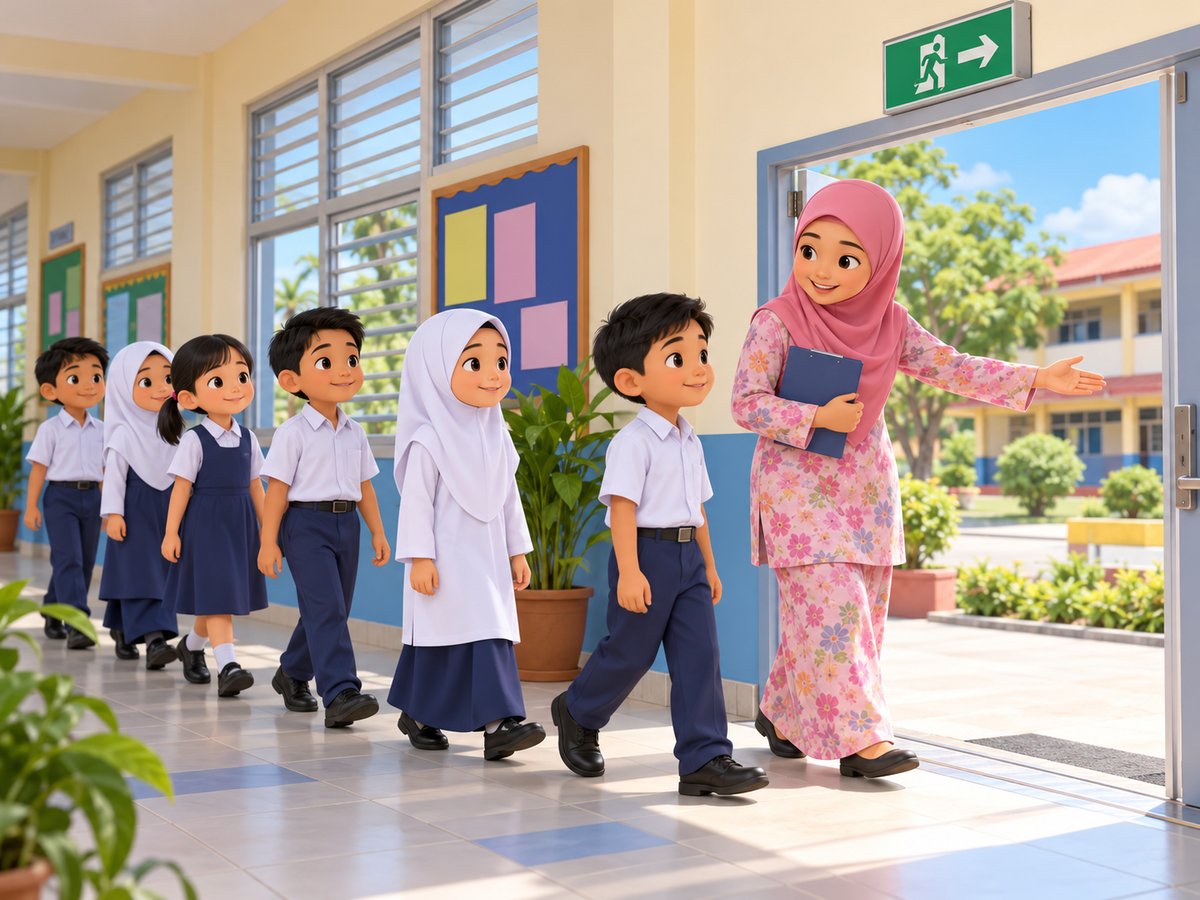
Mendengar dan Bertutur
Selamat menggunakan telefon bimbit
Jangan berkongsi kata laluan, alamat atau gambar peribadi. Bersoal jawab dengan sopan untuk meminta penjelasan.
Contoh: "Cikgu, bolehkah saya tahu cara menyekat mesej daripada orang yang tidak dikenali?"
安全使用手机 = telefon bimbit
不要把密码(kata laluan)、地址或私人照片告诉别人。不明白的地方要有礼貌地问清楚,例如用 bolehkah(可以……吗)开头。
例子:“老师,可以告诉我怎样封锁陌生人的讯息吗?”
注意:个人资料一旦传出去,就很难收回。
using a phone safely = telefon bimbit
Never share your password (kata laluan), address or private photos. Ask politely when you need an explanation, for example starting with bolehkah (may I / could).
Example: "Teacher, could you tell me how to block messages from strangers?"
Watch out: once personal details are shared, they are hard to take back.
Semak kefahaman
Apakah tindakan yang betul apabila orang asing meminta kata laluan?
正确做法 = tindakan betul
密码是私人资料。陌生人来要,应该怎么做?
例子:收到奇怪的连接,也不要随便点开。
注意:不要因为怕对方生气就给。学了这个,试着用它造两三个自己的句子,说给家人听。
the right action = tindakan betul
A password is private information. What should you do when a stranger asks for it?
Example: do not click strange links either.
Watch out: never give it just because you fear the person will be angry.
Membaca
Ciri-ciri keselamatan di rumah
Rumah yang selamat mempunyai alat pemadam api, pengesan asap, palang tingkap dan kunci pintu yang kukuh. Ubat dan bahan kimia disimpan jauh daripada kanak-kanak.
Contoh: Pengesan asap berbunyi apabila ada asap, jadi penghuni dapat keluar dengan segera.
home safety features = ciri keselamatan
A safe home has a fire extinguisher, a smoke detector, window grilles and strong door locks. Medicines and chemicals are kept out of children's reach. A smoke detector beeps when it senses smoke so everyone can get out quickly.
Example: when the smoke detector beeps, the family goes outside at once.
Watch out: a fire extinguisher is for emergencies, not for play.
Semak kefahaman
Apakah fungsi pengesan asap?
烟雾探测器的功能 = fungsi pengesan asap
烟雾探测器不会自己灭火,也不会锁门。它的工作是在有烟的时候发出声音提醒大家。想一想哪一个选项讲的是“提醒”。
例子:厨房冒烟时,探测器就会响。
注意:灭火要用灭火器,不是探测器。
what a smoke detector does = fungsi pengesan asap
A smoke detector does not put out fires or lock doors. Its job is to make a sound to warn everyone when there is smoke. Look for the option that describes a warning.
Example: it beeps when smoke comes from the kitchen.
Watch out: fires are put out with an extinguisher, not a detector.
Menulis
Imlak: keselamatan siber
Dalam imlak, dengar dengan teliti dan tulis setiap ayat dengan ejaan dan tanda baca yang tepat.
Contoh: Ayat imlak: "Jangan berkongsi kata laluan dengan sesiapa. Laporkan mesej yang mencurigakan kepada ibu bapa."
听写 = imlak
听写时要专心听,每个词拼对,句子开头大写,句末加句号(.),列举时用逗号(,)。
例子:“Jangan berkongsi kata laluan dengan sesiapa.”
注意:写完要再检查一次拼写和标点。可以把重点抄进笔记本,旁边写一个自己想到的例子。
dictation = imlak
In dictation, listen carefully, spell every word correctly, start sentences with a capital letter, end with a full stop and use commas in lists.
Example: "Jangan berkongsi kata laluan dengan sesiapa." (Do not share your password with anyone.)
Watch out: check spelling and punctuation again at the end.
the correct sentence = ayat betul
A correct sentence starts with a capital, ends with a full stop and has no unnecessary commas.
Example: "Saya suka membaca."
Watch out: missing capitals or full stops are common errors. Try making two or three sentences of your own with it and say them to your family.
Seni Bahasa
Huruf tunggal Jawi
Tulisan Jawi ditulis dari kanan ke kiri. Antara huruf tunggal Jawi ialah ا (alif), ب (ba), ت (ta) dan ر (ra).
Contoh: Sebut nama setiap huruf dengan betul sebelum menulisnya.
爪夷文单字母 = huruf tunggal Jawi
爪夷文(Jawi)是用阿拉伯字母写马来语的文字,从右往左写。先认识单个字母,例如 alif(ا)、ba(ب)、ta(ت)、ra(ر),再学连写。
例子:先念出字母名称,再照笔顺写。
注意:方向和英文相反,是从右到左。用自己的话向同学解释一次,会记得更牢。
single Jawi letters = huruf tunggal Jawi
Jawi is Malay written in Arabic letters, from right to left. Start with single letters such as alif (ا), ba (ب), ta (ت) and ra (ر), then learn to join them.
Example: say each letter's name, then write it in the right stroke order.
Watch out: the direction is opposite to English: right to left.
Semak kefahaman
Tulisan Jawi ditulis dari arah mana?
书写方向 = arah tulisan
爪夷文用阿拉伯字母,阿拉伯文是怎样写的?
例子:马来文的罗马字(Rumi)是从左到右写。
注意:不要跟 Rumi 搞混。把例句大声朗读两三次,注意发音和语调。
writing direction = arah tulisan
Jawi uses Arabic letters. Which way is Arabic written?
Example: Malay in Rumi (Roman letters) goes left to right.
Watch out: do not confuse it with Rumi. Copy the key point into a notebook with an example you thought of yourself.
Tatabahasa
Kata adjektif cara dan perasaan
Kata adjektif cara menerangkan cara sesuatu dilakukan: cepat, perlahan, cermat. Kata adjektif perasaan menerangkan perasaan: takut, gembira, sedih, cemas.
Contoh: Murid-murid berjalan dengan tenang semasa kawad kebakaran. Adik berasa takut apabila loceng berbunyi.
方式与情感形容词 = adjektif cara dan perasaan
方式形容词说明做事的方式,例如 cepat(快)、perlahan(慢)、cermat(小心)、tenang(冷静)。情感形容词说明感受,例如 takut(怕)、gembira(开心)、sedih(伤心)、cemas(焦急)。
例子:防火演习时学生冷静地走;铃响时弟弟觉得害怕。
注意:方式形容词常跟在动词后面(berjalan dengan tenang)。
adjectives of manner and feeling = adjektif cara dan perasaan
Adjectives of manner describe how something is done: cepat (fast), perlahan (slow), cermat (careful), tenang (calm). Adjectives of feeling describe emotions: takut (afraid), gembira (happy), sedih (sad), cemas (anxious).
Example: during the fire drill pupils walk calmly; little brother feels afraid when the bell rings.
Watch out: manner adjectives often follow the verb (berjalan dengan tenang).
matching adjectives = padankan
Cermat (carefully) and perlahan (slowly) describe how something is done; cemas (anxious) is a feeling.
Example: gembira is an adjective of feeling.
Watch out: ask: is it about how something is done, or how someone feels?
Ringkasan
Syabas!
Waspada selalu
Jangan kongsi kata laluan. Dalam imlak, tulis ejaan dan tanda baca dengan tepat. Jawi ditulis dari kanan ke kiri. Kata adjektif cara menerangkan perbuatan; kata adjektif perasaan menerangkan emosi.